Reptile Supplies vs Alternatives: Which is Better?
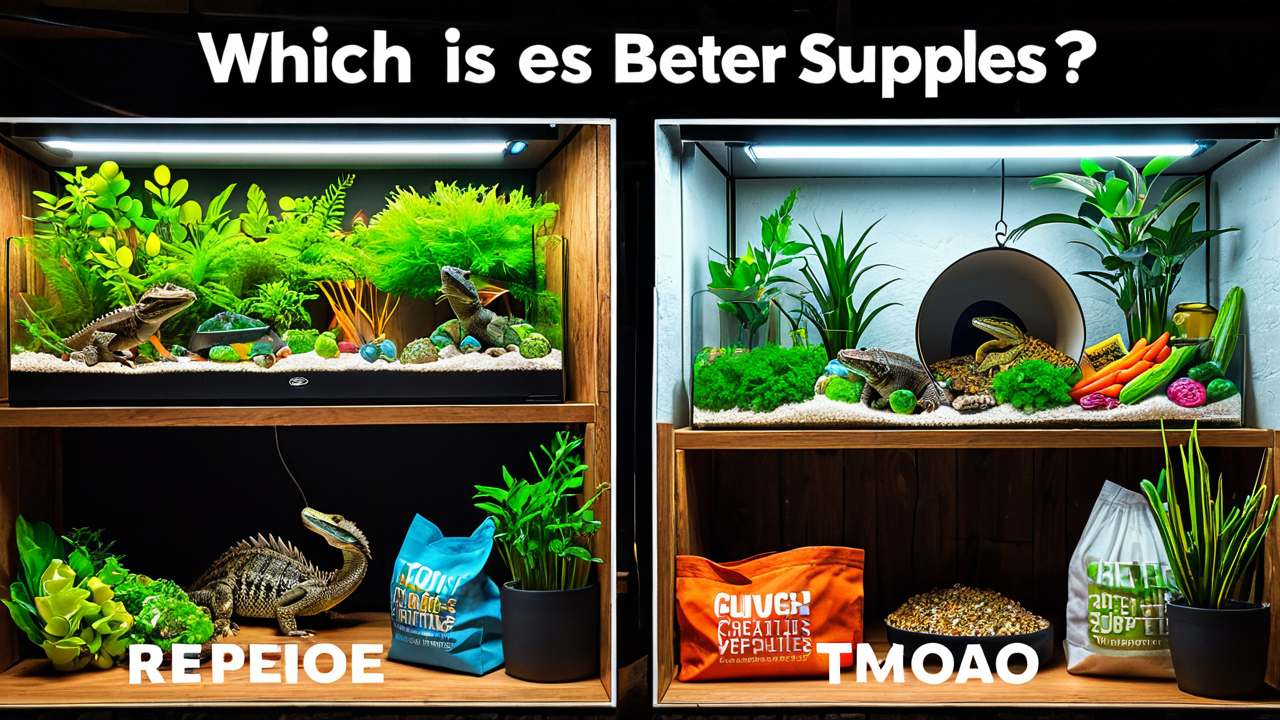
Reptile Supplies vs. Alternatives: A Vet-Reviewed Guide to What's Safe, Effective, and Worth It
As a reptile owner, you want the best for your scaly companion.
The pet care aisle can be overwhelming, filled with specialized "reptile supplies" sitting next to seemingly similar, cheaper "alternatives" from the hardware or craft store.
It’s tempting to save money, but is it safe?
The choice between purpose-built reptile products and generic alternatives isn't just about cost—it's about your pet's health, safety, and long-term well-being.
This comprehensive guide will compare essential reptile supplies with common alternatives across three critical categories: habitats, heating, and food.
We’ll provide clear, actionable advice so you can make informed decisions that prioritize your reptile's health without unnecessary expense.
Why Specialized Reptile Supplies Matter
Reptiles are not like dogs or cats; they are ectotherms (cold-blooded) with highly specific environmental needs.
Their entire physiology—from digestion and immune function to shedding and behavior—is governed by their habitat.
Purpose-built reptile supplies are engineered to meet these precise needs safely.
Alternatives often overlook critical factors like safety materials, appropriate output, and the unique behaviors of reptiles, potentially leading to stress, injury, or illness.
Head-to-Head Comparison: Habitats & Decor
The enclosure is your reptile's entire world. Getting this right is non-negotiable.
Terrariums vs. Alternative Enclosures
| Feature | Purpose-Built Terrarium/Vivarium | Generic Aquarium/Storage Bin |
|---|---|---|
| Ventilation | Engineered cross-ventilation to prevent respiratory issues and allow for proper heat gradients. | Often poor; aquariums have top-only ventilation, bins require DIY modification. |
| Access & Security | Front-opening doors or secure sliding tops for easy access and reduced stress. Secure locks. | Top-access only (stressful), lids may not be escape-proof for strong or clever reptiles. |
| Material & Visibility | Tempered glass or PVC designed to hold heat and humidity. Optimal visibility. | Glass aquariums are heavy and lose heat; plastic bins can scratch and warp. |
| Purpose | Designed specifically for reptile heating/lighting fixture placement and environmental control. | Requires improvisation for fixture mounting, risking falls or thermal damage. |
| Verdict | HIGHLY RECOMMENDED. The investment in a proper enclosure is the foundation of all other care. | |
| RISKY. Can work as a temporary, quarantine, or breeding tub for some species under expert guidance, but is generally inferior for permanent housing. | ||
Actionable Advice: Invest in a properly sized terrarium from the start. For arboreal (tree-dwelling) species like crested geckos, prioritize height. For terrestrial (ground-dwelling) species like leopard geckos, prioritize floor space. A good enclosure saves money long-term by preventing escape and health problems.
Terrarium Decor: Specialty vs. DIY/Natural
Terrarium decor serves functional purposes: security (hides), climbing/basking (branches), humidity (moisture-retaining substrates), and mental stimulation.
Hides & Caves:
- Reptile Supply: Commercial hides are made from non-porous, easy-to-clean materials like resin or plastic. They come in appropriate sizes and often have two exits to prevent the reptile from feeling trapped.
- Alternative: Flower pots, food containers, or cardboard boxes.
- Comparison: While a clean, sanded terracotta pot makes an excellent cheap hide, it is porous and can harbor bacteria. Cardboard molds quickly and must be replaced constantly. Verdict: Alternatives can work if they are safe (no sharp edges), cleanable, and appropriately sized. Ensure the reptile can fit its entire body inside.
Climbing Branches & Backgrounds:
- Reptile Supply: Terrarium decor like driftwood, bamboo, and cork rounds are often baked or treated to remove pests and sap. Backgrounds provide security and climbing space.
- Alternative: Branches collected from outdoors.
- Comparison: Outdoor wood can harbor mites, fungi, pesticides, or toxic sap (e.g., pine, cedar). It must be rigorously sanitized by baking at a low temperature (250°F for an hour) or soaking in a bleach solution, then thoroughly rinsed and dried. Verdict: DIY is possible but labor-intensive and carries risk if not done perfectly. For beginners, store-bought is safer.
Top Picks for Terrarium Decor:
- Zoo Med Repti Shelter: A classic, easy-to-clean hide available in multiple sizes.
- Fluker's Natural Cork Rounds: Excellent for climbing and hiding; naturally resistant to mold.
- Exo Terra Jungle Vine: Versatile, bendable, and safe for creating climbing structures.
Head-to-Head Comparison: Heating & Lighting
This is the category where using alternatives is most dangerous. Incorrect heating is a leading cause of reptile health issues.
Reptile Heat Lamps vs. Household Bulbs
| Feature | Reptile Heat Lamp | Household Incandescent Bulb |
|---|---|---|
| Spectrum & Output | Designed to emit primarily infrared heat (especially Infrared-B & C) that penetrates tissue for effective warming. |
Some provide beneficial UVA.
| Emits a broad spectrum with a high proportion of visible light.
Inefficient at producing deep-penetrating heat.
|
| Safety | Built to withstand high temperatures and constant use. Fixtures are rated for the wattage. | Not designed for continuous operation in damp environments; can shatter or fail. |
| Control | Often used in conjunction with thermostats; wattages are predictable for reptile setups. | Wattage doesn't directly correlate to effective heat output for reptiles. |
| Verdict | NON-NEGOTIABLE. The correct heat source is a medical necessity. | UNSAFE & INEFFECTIVE. A fire hazard and does not provide the right type of heat. |
Heat Mats/Pads:
- Reptile Supply: Under Tank Heaters (UTH) are low-wattage, waterproof, and designed to be used under a glass/plastic tank with a thermostat.
- Alternative: Human heating pads, electric blankets.
- Comparison: Human heating pads are NOT waterproof, have auto-shutoff features (leaving your reptile cold), and can overheat dramatically, causing severe thermal burns. Verdict: NEVER use human heating pads. Always use a UTH connected to a thermostat to regulate temperature.
The Thermostat: The Most Important Supply
This is not an alternative; it is mandatory.
A thermostat plugs into your heat source (lamp or mat) and has a probe to monitor temperature, turning the heat on/off to maintain a set range.
It prevents cooking or freezing your pet.
There is no safe alternative.
Actionable Advice: Create a temperature gradient. One side of the tank (the basking spot) should be at the species-specific warm temperature (e.g., 95°F for a bearded dragon), and the opposite side should be cooler (e.g., 80°F). This allows your reptile to thermoregulate. Always measure temperatures with digital thermometers, not analog stick-ons.
Top Picks for Heating:
- Fluker's Clamp Lamp: A reliable, ceramic-socket lamp for heat bulbs.
- Zoo Med ReptiTherm Under Tank Heater: A standard, effective UTH.
- BN-LINK Digital Thermostat: An affordable, essential device for controlling any heat source.
UVB Lighting: No Alternatives Exist
UVB light allows reptiles to synthesize vitamin D3, which is critical for calcium absorption. Without it, they develop Metabolic Bone Disease (MBD)—a painful, crippling, and fatal condition.
- Reptile Supply: Linear fluorescent or compact coil UVB bulbs designed for reptiles (e.g., Zoo Med ReptiSun, Arcadia D3).
- Alternative: "Full-spectrum" plant lights, aquarium lights, or natural sunlight through a window.
- Comparison: Household bulbs emit little to no UVB. Window glass filters out 100% of UVB rays, so placing a tank by a window does nothing but create dangerous temperature swings. Verdict: There is NO safe or effective alternative to a quality, reptile-specific UVB bulb. Replace it every 6-12 months as output decays.
Head-to-Head Comparison: Food & Nutrition
Lizard Food & Insect Feeders
Staple Diets:
- Reptile Supply: Commercial lizard food diets (pellets, gels, or powders like Repashy or Pangea for omnivores/herbivores) are scientifically formulated to be complete nutrition.
- Alternative: Human vegetables/fruits alone; dog/cat food.
- Comparison: While fresh greens (collard, mustard, dandelion) are excellent for herbivores like iguanas, they lack the full vitamin/mineral balance alone. Dog/cat food is far too high in protein, fat, and vitamin D for most reptiles and causes severe organ damage. Verdict: Use commercial diets as a reliable base, and supplement with approved fresh foods for variety. For insectivores, there is no alternative to live prey.
Live Feeders & Gut-Loading:
- Reptile Supply: Feeder insects from pet stores (crickets, dubia roaches, black soldier fly larvae) are raised as food.
- Alternative: Insects caught in the wild.
- Comparison: Wild insects can carry parasites, diseases, or pesticides. They are nutritionally undefined. Verdict: NEVER feed wild-caught insects. Always "gut-load" your store-bought feeders by feeding them nutritious vegetables (sweet potato, squash, commercial gut-load) 24-48 hours before offering them to your reptile. This turns the insect into a nutritious vessel.
Supplements:
Calcium and multivitamin powders are essential for almost all captive reptiles. There is no alternative. Dust insects or salads as per your species' needs (usually calcium w/o D3 at most feedings, calcium with D3 and a multivitamin less frequently).
Actionable Advice: Research your specific reptile's diet (herbivore, insectivore, carnivore). For insectivores, variety is key—rotate crickets, roaches, and worms. Always remove uneaten live prey to prevent stress or injury to your reptile.
Top Picks for Nutrition:
- Repashy Grub Pie Gel Diet: A superb complete food for insectivorous reptiles like cresties.
- Zoo Med Natural Adult Bearded Dragon Food: A good pellet option to supplement a fresh salad diet.
- Fluker's High Calcium Cricket Diet: An excellent product for gut-loading your feeder insects.
Final Verdict: When to Save and When to Spend
Invest in These Reptile Supplies (Do Not Compromise):
- The Enclosure: Get a proper terrarium.
- Heating & Thermostat: Use only reptile heat sources controlled by a thermostat.
- UVB Lighting: Buy a quality linear UVB bulb and replace it regularly.
- Substrate (for some species): For species requiring high humidity or that burrow, a proper substrate (coconut fiber, cypress mulch) is key. For others, paper towel is a safe, simple alternative.
- Nutrition: Use reputable feeder insects, commercial diets, and essential supplements.
Where Alternatives Can Be Considered (With Caution):
- Hides & Decor: DIY hides from clean, non-toxic ceramics or properly sanitized natural wood can work well.
- Water & Food Dishes: Heavy, shallow ceramic dishes from a home goods store are perfect.
- Cleaning: A diluted white vinegar solution or chlorhexidine (sold for reptiles) are safe, effective cleaners. Avoid household cleaners with harsh fumes.
- Plant Life: Many non-toxic houseplants (e.g., pothos, spider plants, bromeliads) can be used in bioactive setups after being washed and repotted in organic soil.
The well-being of your reptile hinges on a stable, appropriate environment.
While initial costs for proper supplies may be higher, they prevent astronomical vet bills and heartache down the line.
When in doubt, choose the product designed for the unique biology of your pet.
Frequently Asked Questions (FAQ)
1. Can I use a regular light bulb from my house for my reptile's heat?
No.
Regular incandescent bulbs can be used in a pinch to provide ambient heat if monitored closely, but they are not ideal.
They produce more visible light than penetrating infrared heat, can disrupt day/night cycles if used at night, and are not designed for the constant use and humidity of a terrarium.
A reptile-specific basking bulb or ceramic heat emitter is safer and more effective.
2. Is it okay to use sand from the beach or playground in my reptile's tank?
Absolutely not.
Play sand and beach sand are compactable, can cause life-threatening impaction if ingested, and often contain silica dust (a respiratory irritant) or contaminants.
Calcium-based "sands" marketed for reptiles are also controversial and risky for most species.
Safer substrates include paper towel, reptile carpet, tile, or coconut fiber, depending on the species.
3. My house is always warm. Do I still need a heat lamp?
Yes.
Reptiles need a gradient, not just a warm ambient temperature.
They require a specific, localized basking spot that is significantly warmer than the rest of the enclosure to properly digest food and regulate their metabolism.
Your house's general warmth does not provide this critical gradient.
4. Can I just give my lizard a calcium supplement and skip the UVB light?
This is species-dependent and risky.
Some nocturnal species can metabolize oral D3 from supplements.
However, for most diurnal (day-active) reptiles like bearded dragons and turtles, exposure to UVB light is the natural and most effective way for them to produce and regulate their own D3.
Relying solely on supplements can lead to improper dosing and health issues.
Always provide UVB unless specifically advised otherwise for your nocturnal species.
5. Are plastic storage bins really that bad for snake enclosures?
For many experienced snake keepers, modified plastic storage bins (tubs) are a popular, cost-effective choice for breeding projects or housing certain species.
They hold heat and humidity well.
However, they require significant DIY modification for secure clips, ventilation, and safe heating/lighting installation.
They also offer limited visibility and enrichment.
For the average pet owner, a front-opening glass or PVC terrarium is safer, more secure, and better for animal welfare and owner enjoyment.
6. How can I save money on reptile supplies without risking my pet's health?
- Buy the right size the first time. Don't buy a small tank knowing you'll need a bigger one in 6 months.
- Invest in a thermostat. It protects your pet and your heat sources from burning out.
- Shop for decor during aquarium/terrarium sales. Many items are interchangeable.
- Make your own hides from safe, non-toxic materials like food-grade storage containers.
- Join reptile forums or local groups. Experienced keepers often sell quality used equipment.
- Never skimp on the essentials: UVB lighting, proper heat, and a quality primary diet.